| Decoding the Age of New Imperialism (c. 1870–1900) |
Introduction and Overview
Objectives: Analyze the economic and technological factors that drove European imperial expansion in the late 19th century. Identify and map the key imperial powers and their colonial territories. Evaluate the impact of imperialism on colonized societies and global power dynamics. Critically examine the relationship between industrialization and colonial resource extraction
The “Age of Imperialism” (starting around 1870) was when industrialized nations like Britain, France, Germany, Belgium, Japan, and the United States rapidly expanded control over territories in Africa, Asia, and beyond. Industrialization created huge factories needing raw materials (e.g., rubber, cotton, ivory) and new markets for manufactured goods, while nationalism fueled competition to claim land.
Session 1: Mapping the Empires
Understanding Imperial Expansion
During the late 19th century, industrialized nations engaged in a dramatic global competition to acquire territories across Africa, Asia, and beyond. This period, known as the Age of New Imperialism, saw major world powers rapidly expanding their global influence through various methods of territorial control.
This period fundamentally reshaped global political, economic, and social landscapes, creating lasting impacts that continue to influence international relations today.
Key Imperial Powers and Their Territories
Major Imperial Powers
- Great Britain
- Largest empire in history
- Controlled territories across all continents
- Key regions: India, Africa, Australia, Canada
- France
- Significant presence in Africa and Southeast Asia
- Major colonies in Algeria, Indochina
- Extensive colonial administration system
- Germany
- Late but aggressive imperial power
- Controlled territories in Africa:
- Namibia
- Togo
- Cameroon
- Parts of Tanzania
- Belgium
- Notably brutal colonial control
- Dominated the Congo Free State
- Primarily focused on resource extraction
Mapping Symbols
When creating an imperial territory map, use these notations:
- ★ Direct Colony (Complete territorial control)
- P Protectorate (Indirect rule, local governance with imperial oversight)
- $ Sphere of Influence (Economic and political control without direct administration)
Mapping Strategy
- Use a large, blank world map
- Assign distinct colors to each imperial power
- Show type of control
- Add labels and annotations
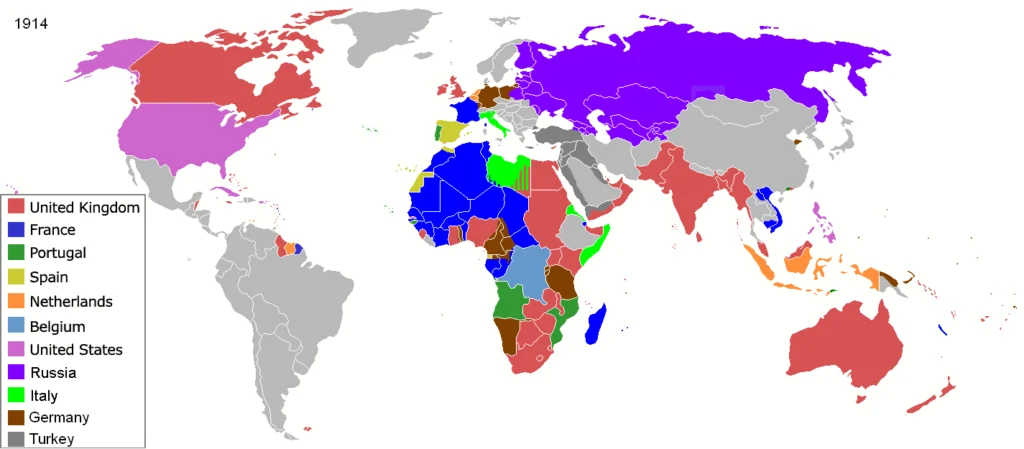
Activity 1: Map the Empires
Shade and label major imperial powers’ territories c. 1900 and assign a color to each. Focus on these (you can do more):
Britain
France
Germany
Belgium
Italy
Portugal
Add 6 – 8 specific labels (perhaps with flags or logos) for key territories/examples.
These could include:
Suez Canal control (Britain)
Algeria (France)
Indochina (France)
Namibia (Germany)
Togo (Germany)
Congo (Belgium)
Here is example info you might include:
India
Occupied by: Britain
Method of Control: Direct Colony ★
Key Economic Interests: Textile production, tea, spices
Notable Event: British East India Company administration
Resistance Movement: Sepoy Rebellion (1857)
Mapping The Empires Tutor Chat
Session 2: Africa’s Wealth & Europe’s Hunger
Goal: Locate key natural resources that Europeans exploited during the Scramble for Africa, understand their industrial uses back in Europe, and connect this to why colonization happened so aggressively (industrial needs for raw materials + markets).Materials
- Printed blank outline map of Africa (large/simple for labeling.
Activity 2: Scramble for Africa Map
These are the major resources Europeans targeted during the Scramble (drawn from historical accounts of the era). These drove much of the rush because industrialization needed them for factories, machines, and goods. Complete the table.
| Resource | Industrial Uses in Europe | Key Economic Impact |
| Rubber | ||
| Ivory | ||
| Gold | ||
| Diamonds | ||
| Palm Oil | ||
| Cotton | ||
| Copper/Tin | ||
| Groundnuts | ||
| Cocoa | ||
| Coffee | ||
| Timber | ||
| Oilseeds |
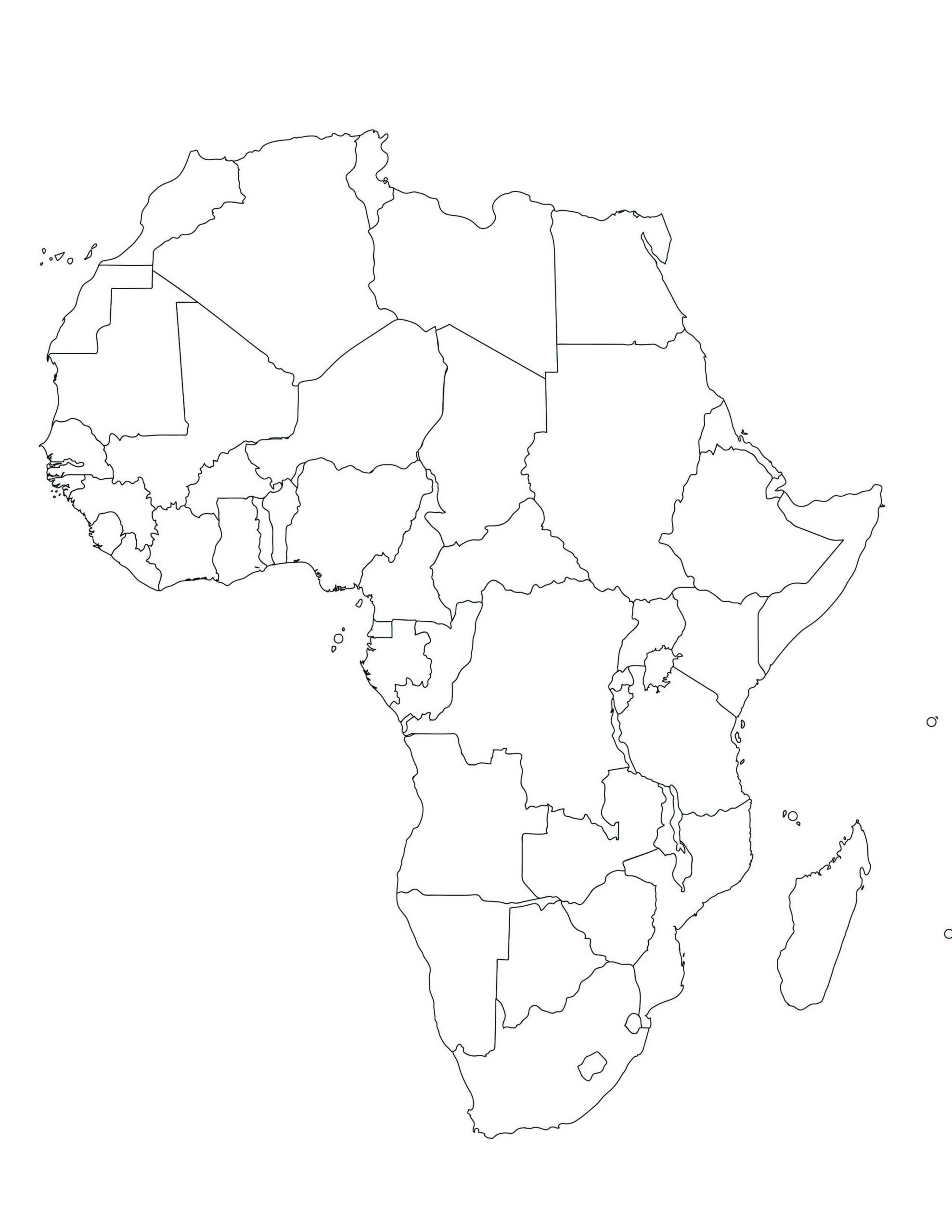
- On your blank Africa map:
- Locate and mark/shade each resource’s main colonial-era hotspots (use colors/symbols for each resource).
For each mark, add a tiny label: Resource name, location, and one European industrial use (e.g., “Rubber – Congo basin – tires & machine parts”).
Session 3: Video Deep Dive
Watch 5–6 short clips from the Freeman-pedia page
Session and Activity 4: Reflection Essay
https://www.britannica.com/topic/New-Imperialism
Write a short essay
Essay Topics / Questions
- How did economic motivations drive European powers to pursue imperial expansion in the late 19th century?
- What technological advancements enabled European nations to establish and maintain colonial territories during the New Imperialism era?
- How did different European powers develop unique strategies for colonial conquest and control?
- In what ways did indigenous populations resist imperial control and colonial domination?
- What were the long-term cultural and economic consequences of New Imperialism for both colonized regions and imperial powers?
- How did racial ideologies and concepts of cultural superiority shape imperial policies and justifications for colonization?
Key Terminology
- Mercantilism
- Colonial extraction
- Economic imperialism
- Metropolitan economies
- Peripheral economies
Wrap-up – Colonial Empire Personality Quiz: Which Historical Power Are You?
Colonial Empire Personality Quiz: Which Historical Power Are You?
Rubric
| Criteria | 1 Point | 2 Points | 3 Points | 4 Points |
| Mapping Imperial Territories (Activity 1) | Minimal map details; 1-2 territories identified; no color coding | Partial map with 3-4 imperial powers marked; basic labeling | Accurate map with 5+ imperial powers; clear territorial boundaries; appropriate color coding | Exceptionally detailed map with precise territorial shading; 6+ powers; advanced symbolic notation; comprehensive geographical representation |
| Resource Exploitation Analysis (Activity 2) | Limited understanding of colonial resources; minimal connection to industrial uses | Basic identification of 2-3 resources; surface-level explanation of economic impact | Comprehensive analysis of 4-5 resources; clear links between colonial extraction and European industrial needs | Sophisticated exploration of resource exploitation; nuanced understanding of economic, social, and technological implications; multiple complex examples |
| Historical Reflection Essay (Activity 4) | Minimal historical understanding; no specific examples | Basic essay with general historical overview; 1-2 vague examples | Well-developed essay with 3 specific historical examples; solid explanation of processes | Sophisticated essay with multiple examples; profound analysis of systemic historical consequences; demonstrates deep critical thinking about imperial dynamics |