| Worlds in Flames: Global Conflict and Human Horror, 1900–Present – Part One |
Objectives:
Identify the main long-term causes of World War I (militarism, alliances, imperialism, nationalism) and explain how the July Crisis of 1914 turned a regional conflict into a global war.
Describe how World War I was fought as a total war, including the nature of trench warfare, war of attrition, and the role of new technologies (machine guns, poison gas, tanks, submarines, airplanes).
Explain why the Schlieffen Plan failed, leading to stalemate on the Western Front, and outline the global involvement of colonies, non-European theaters, and home-front mobilization (propaganda, economic strain).
Assess the major consequences of World War I, including the enormous human cost, the Treaty of Versailles, the collapse of four empires, and how the flawed peace created seeds for future instability.
Unit Overview:
The era from c. 1900 to the present stands as one of the most transformative and turbulent in human history. At the dawn of the 20th century, Europe (along with powers like the United States, Russia, and Japan) dominated the global political order through vast land-based and maritime empires. Yet this dominance was fragile and challenged by rising nationalism, revolutionary ideologies, economic rivalries, and technological advances that made warfare more destructive than ever before.
This 3-part unit explores the global conflicts that dominated the era, the dramatic changes in the global political order after 1900, and the devastating mass atrocities that marked the century. Two world wars reshaped borders, toppled empires, and killed tens of millions, while the interwar years exposed the fragility of peace efforts and sowed seeds for even greater catastrophe. These conflicts were not isolated to Europe; they drew in colonies, non-European powers, and global economies, accelerating decolonization, ideological struggles, and shifts toward new forms of international organization.
Theme Day 1 examines the shifting global power dynamics after 1900 and the outbreak, conduct, and immediate aftermath of World War I: the conflict that shattered the old order and set the stage for future instability.
Theme Day 2 covers the uneasy interwar period and the descent into World War II, exploring its causes, global scale, and how new forms of warfare and total mobilization defined the deadliest conflict in history.
Theme Day 3 focuses on mass atrocities after 1900, with deep attention to the Holocaust and Britain’s specific challenges in responding to it, while connecting these horrors to broader patterns of genocide, ethnic cleansing, and the era’s ideological extremes.
Theme Day 1: Shifting Global Power and the Road to World War I
Changes in the Global Political Order After 1900
Early Optimism through the Poem Reading: Rupert Brooke’s “The Soldier”
This poem captures the worldview of 1914: patriotic idealism tied to empire. After 1900, that ‘old order’ was already cracking and empires like Britain’s began to face challenges, setting the stage for WWI.
https://www.poetryfoundation.org/poetrymagazine/poems/13076/the-soldier
Activity 1: Key Themes From the Poem
Highlight the following:
- romantic nationalism
- the idea of empire as eternal and civilizing
- imperial confidence
- the glorification of sacrifice
The Declines of Empires
- Enclosures & Land Grabs: Landlords fenced off commons for big farms; smallholders lost livelihoods, spiking rural joblessness.
- Agricultural Revolution + Population Surge: Better farming displaced workers; Europe’s population doubled (e.g. Britain 1750 to 1850), creating land shortages and surplus kids to feed.
- Rural Job Collapse: Handcrafts (such as weaving) died against factory machines.
Bitter Realism
https://www.poetryfoundation.org/poems/46560/dulce-et-decorum-est
Decline of land-based empires
After 1900, land-based empires which were vast, multi-ethnic territories held together by centralized autocracy, military force, and traditional legitimacy, faced accelerating decline due to internal weaknesses, modernization failures, and surging nationalism.
The Ottoman Empire, long derided as the “sick man of Europe,” was increasingly weakened by ethnic nationalism in the Balkans (e.g., Serbian, Bulgarian, and Greek independence movements), culminating in the Balkan Wars (1912 to 1913) that stripped away European territories and exposed military obsolescence. Repeated defeats, corruption, and economic stagnation eroded central authority, paving the way for its final collapse in World War I.
The Russian Empire struggled with rapid but uneven industrialization under Tsar Nicholas II, which created urban discontent, poor working conditions, and rural overpopulation while failing to modernize governance. The humiliating defeat in the Russo-Japanese War (1904 to 1905) triggered the 1905 Revolution (Bloody Sunday massacre, strikes, and mutinies), forcing limited reforms like the Duma parliament. Unresolved tensions exacerbated by World War I’s massive casualties, food shortages, and economic collapse, led to the 1917 revolutions that toppled the tsarist regime entirely.
In Qing China, centuries of imperial rule ended with the 1911 Revolution (Xinhai Revolution), sparked by the Wuchang Uprising amid widespread anger over foreign humiliations (Opium Wars, unequal treaties, Boxer Rebellion aftermath), failed reforms (New Policies of 1901 to 1911), corruption, and Han Chinese resentment toward Manchu rule. Provincial revolts spread rapidly, forcing the abdication of the boy emperor Puyi in February 1912 and establishing the Republic of China, thus ending over two millennia of dynastic governance.
These collapses fragmented huge territories, redrew maps, unleashed new nation-states and ideologies, and created power vacuums that fueled global instability leading into World War I.
Challenges to maritime empires
After 1900, maritime empires such as Britain and France faced growing challenges from rising anti-colonial nationalism. In British India, the Indian National Congress expanded from moderate reform demands into a powerful nationalist movement, especially after the 1905 Partition of Bengal sparked mass protests and boycotts. In Egypt, under British control since 1882, wartime hardships and the 1919 Revolution sparked by the exile of nationalist leader Saad Zaghloul, led to widespread strikes and demands for independence. These movements highlighted imperial overstretch, economic grievances, and emerging national identities, eroding the legitimacy and control of sea-based empires ahead of World War I.
Revolutions & new states/ideologies
After 1900, a wave of revolutions and the rise of new states and ideologies further eroded traditional imperial structures, introducing modern nationalism, republicanism, and radical social ideas that challenged the global political order. These developments created new nation-states, inspired anti-imperial movements, and fueled ideological competition, contributing to pre-WWI instability.
Mexican Revolution (1910)
Sparked by widespread discontent with Porfirio Díaz’s long dictatorship (1876–1911), which favored wealthy landowners and foreign investors while exploiting peasants and workers through land dispossession and economic inequality. Francisco Madero’s call for fair elections and his Plan de San Luis Potosí ignited armed uprisings led by figures like Emiliano Zapata (demanding land reform in the south) and Pancho Villa (in the north). The revolution evolved into a decade-long civil war involving shifting alliances, foreign interventions (especially U.S. involvement), and massive casualties (around 1 million dead). It destroyed the old oligarchic order, replaced the Federal Army with revolutionary forces, and culminated in the 1917 Constitution, emphasizing land redistribution, labor rights, and social justice, and establishing a more inclusive republic and marking one of the first major 20th century social revolutions in the Americas.
Chinese Revolution (1911 – Xinhai Revolution)
Triggered by long-standing grievances against the Qing Dynasty’s corruption, failure to modernize effectively, foreign humiliations (unequal treaties, loss in wars), and Manchu ethnic dominance over the Han majority. The Wuchang Uprising in October 1911, led by revolutionary soldiers allied with Sun Yat-sen’s Tongmenghui (Revolutionary Alliance), spread rapidly across provinces. It forced the abdication of the boy emperor Puyi in February 1912, ending over 2,000 years of imperial rule in China. The revolution established the Republic of China, promoted nationalist and republican ideals (Three Principles of the People: nationalism, democracy, livelihood), and opened the door to further turmoil (warlord era) but symbolized the collapse of one of the world’s oldest dynasties and inspired anti-colonial movements elsewhere.
Rise of socialism/communism
In the late 19th and early 20th centuries (pre WWI), socialist ideas rooted in Karl Marx and Friedrich Engels’ critiques of industrial capitalism gained traction amid worker exploitation, urbanization, and inequality. Utopian socialism gave way to “scientific socialism,” with growing labor movements, trade unions, and political parties (e.g., German Social Democrats as Europe’s largest party by 1912). Communism, as a revolutionary variant, emphasized class struggle and proletarian internationalism, spreading through Marxist texts like The Communist Manifesto (1848) and influencing radical wings. By the 1910s, these ideologies challenged capitalist empires, offered alternatives to liberalism, and set the stage for the 1917 Russian Bolshevik Revolution, reshaping global politics with promises of equality and state-led transformation.
Young Turks in the Ottoman Empire (1908 Revolution)
The Committee of Union and Progress (CUP), known as the Young Turks, comprising military officers, intellectuals, and reformers, opposed Sultan Abdülhamid II’s absolutism, economic stagnation, military arrears, and ethnic unrest in Macedonia. Inspired by constitutional revolutions elsewhere (Russia 1905, Persia 1906), army mutinies in Macedonia forced the sultan to restore the 1876 constitution in July 1908, ushering in the Second Constitutional Era with parliamentary elections and greater freedoms. The revolution aimed at modernization, centralization, and Ottoman unity (“Liberty, Equality, Fraternity”), but it empowered Turkish nationalism within the CUP, suppressed some minorities, and failed to halt imperial decline. It ultimately contributed to Balkan losses, internal tensions, and the empire’s WWI trajectory toward collapse.
These events collectively demonstrated how revolutions could topple ancient regimes, birth fragile new states, and inject competing ideologies (nationalism, republicanism, socialism) into the global arena, weakening old empires and heightening pre-war rivalries.
Geographical shifts
Geographical shifts after 1900 redrew borders and power maps as nationalism, economic rivalries, and imperial overstretch eroded old empires. In the Balkans, nationalist uprisings and the Balkan Wars (1912 to 1913) carved independent states (Serbia, Bulgaria, Greece expansions) from Ottoman territory, shrinking the empire and creating volatile new frontiers. Economic rivalries intensified competition for colonies, resources, and markets, while imperial overstretch left powers like Britain and France struggling to maintain distant holdings amid rising costs and local resistance. Western dominance, rooted in industrial, naval, and colonial superiority, persisted into the 1910s, but it was increasingly contested by emerging challengers (Japan, rising U.S. influence) and internal fractures, foreshadowing the dramatic territorial upheavals of World War I.
Activity 2: Decline of the Ottoman Empire
- Create two maps.
- The Ottoman Empire at it’s height (1912 – Before The First Balkan War)
- The Ottoman Empire after World War I and the Treaty of Sèvres.
The Nature of Total War: Trench Warfare, War of Attrition, and New Technologies
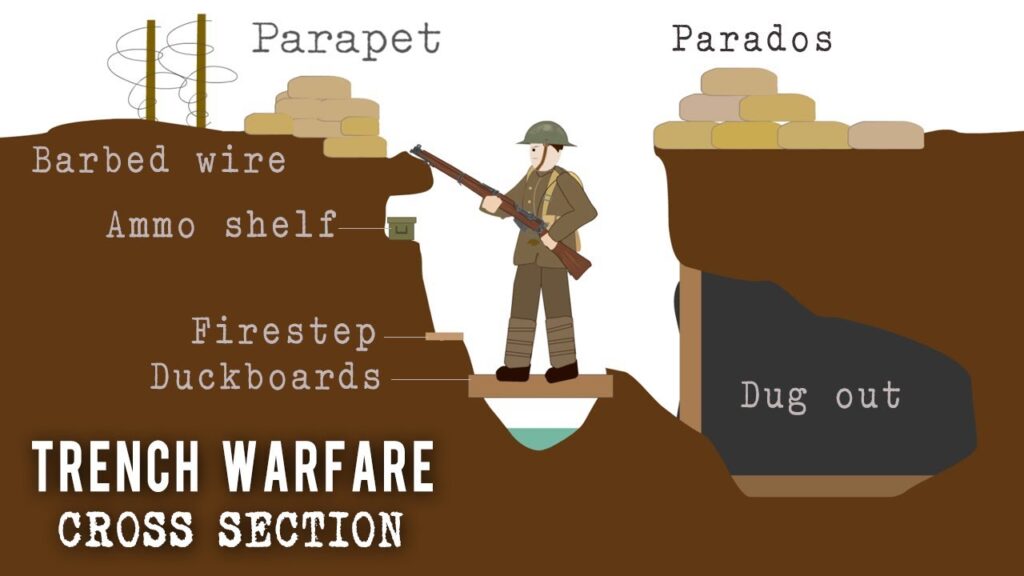
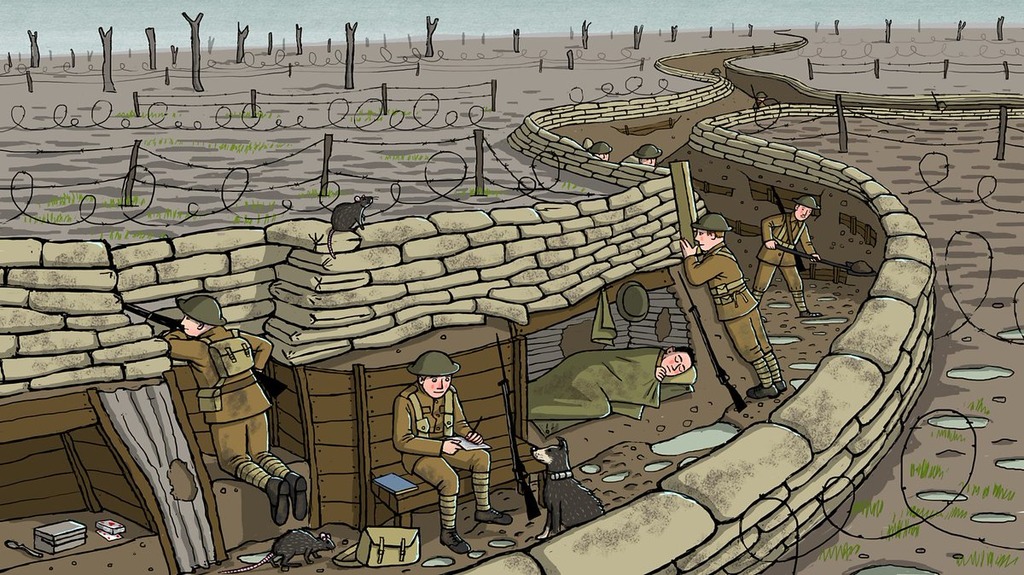
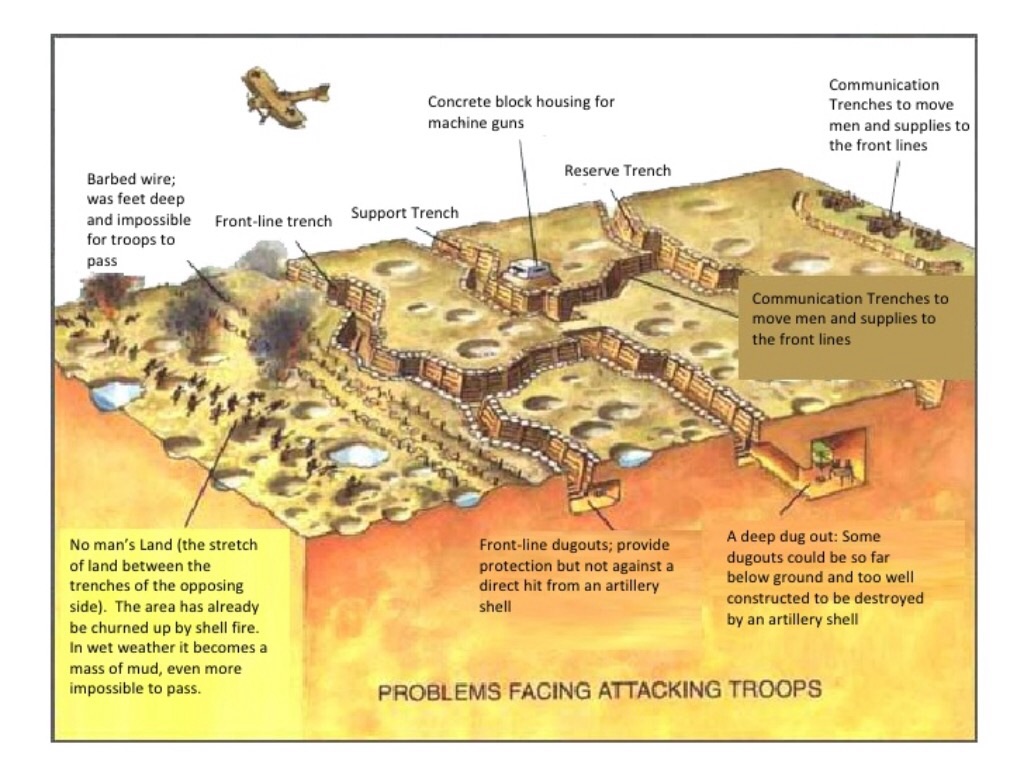
WWI became a total war. Governments mobilized all resources (economy, population, industry) for victory, leading to unprecedented scale and destruction. The Western Front (France/Belgium) epitomized this as a war of attrition: neither side could achieve decisive breakthrough, so battles aimed to wear down the enemy through massive casualties and resource exhaustion.Trench warfare dominated after late 1914: Soldiers lived in elaborate networks of trenches (front-line, support, reserve) separated by “No Man’s Land” filled with barbed wire, craters, mud, rats, and disease. Attacks involved “going over the top” into machine-gun fire, often resulting in minimal gains at huge cost (e.g., Somme 1916: 1 million casualties for around 6 miles).
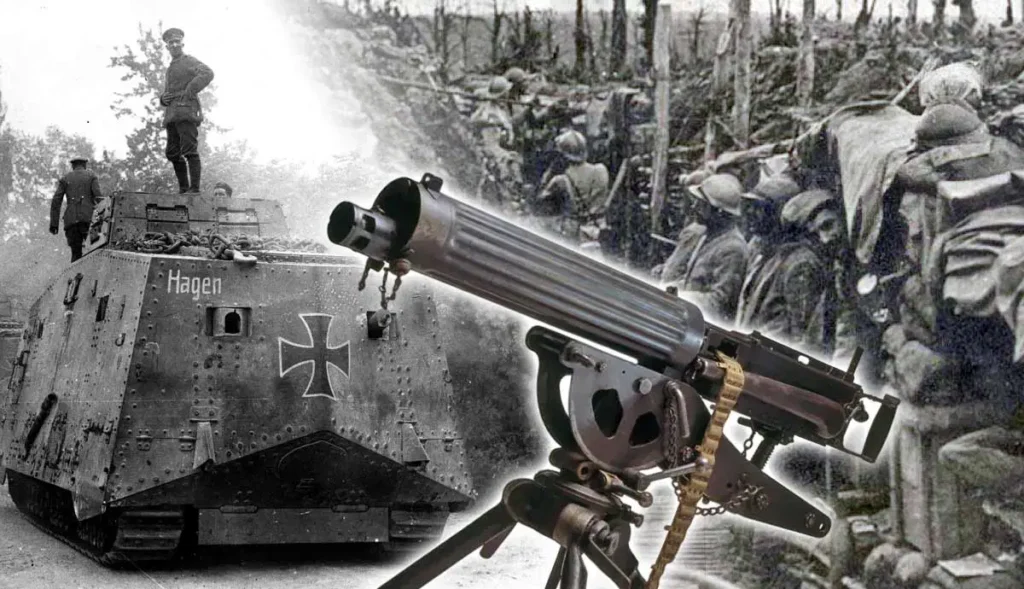
New technologies revolutionized (and brutalized) fighting, favoring defense over offense:
- Machine guns (e.g., Maxim, Vickers): Fired 500+ rounds/min, mowing down advancing infantry.
- Poison gas (first used 1915 at Ypres): Chlorine, phosgene, mustard gas caused horrific burns/blindness; gas masks developed but ineffective at times.
- Tanks (British debut 1916 at Somme): Slow, unreliable early models broke wire and crossed trenches but were limited.
- Submarines (U-boats): German unrestricted warfare targeted Allied shipping, nearly starving Britain.
- Airplanes: Evolved from reconnaissance to dogfights and bombing; aces like Manfred von Richthofen emerged.
These innovations prolonged the stalemate, turning war into industrialized slaughter.
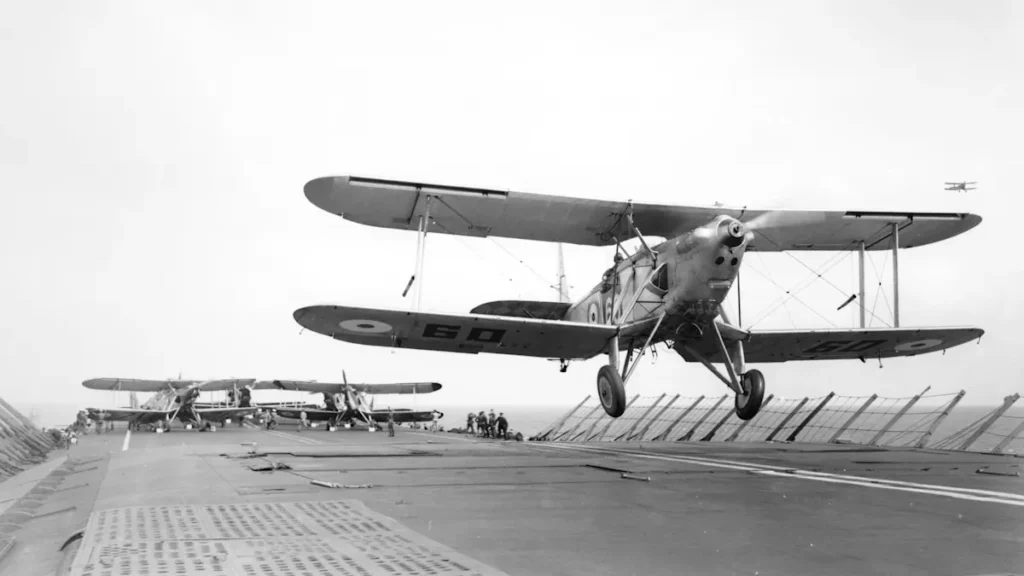
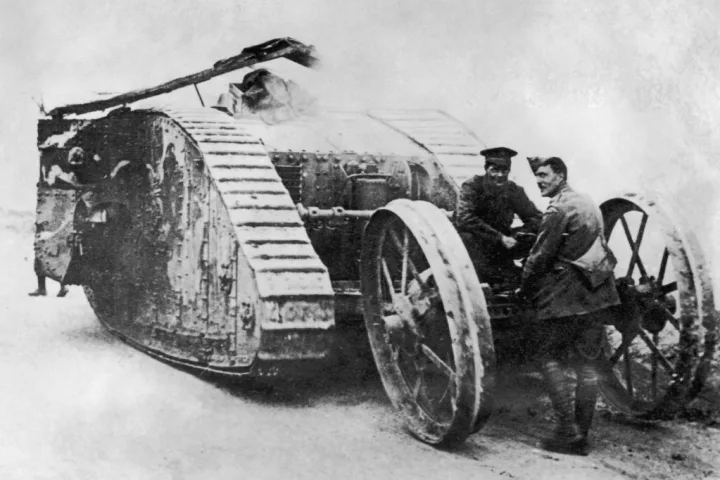
The Schlieffen Plan and Its Failure
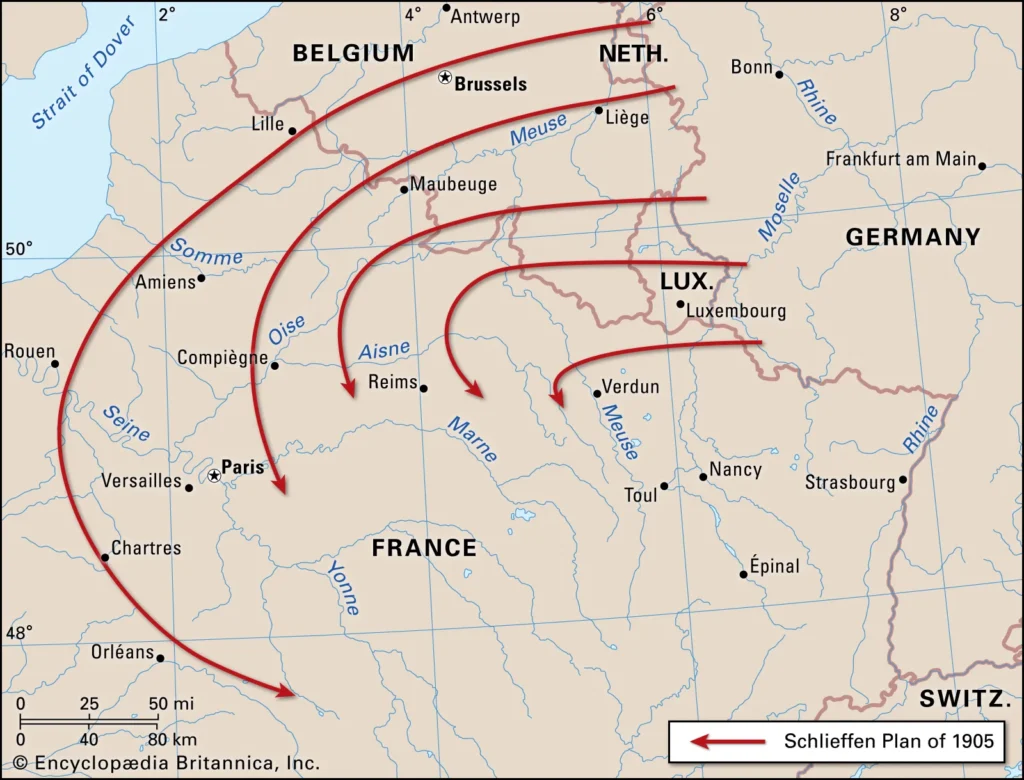
Germany’s pre-war strategy (developed by Alfred von Schlieffen, modified by Helmuth von Moltke the Younger) aimed for quick victory: Defeat France in 6 weeks via a massive right-wing sweep through neutral Belgium, then pivot east against slow-mobilizing Russia, avoiding a prolonged two-front war.
This is a classic depiction of the original Schlieffen Plan as conceived by Alfred von Schlieffen in 1905–1906. It shows the intended German strategy for a rapid victory over France in a two-front war scenario.
Failure factors:
Belgian resistance delayed advance; Russia mobilized faster than expected (invading East Prussia); Moltke weakened the right wing to reinforce elsewhere. British Expeditionary Force reinforced French lines.
Culminated in the Battle of the Marne (Sept 1914, “Miracle of the Marne”): Allies halted Germans approximately 30 miles from Paris (using Paris taxis to rush troops). Germans retreated to the Aisne River.
Led to the “Race to the Sea”: Both sides tried flanking maneuvers but failed, digging in and creating 500-mile trench line from Swiss border to North Sea by winter 1914 to 1915.
This collapse doomed hopes of short war, forcing Germany into multi-front attrition.
Home Front Mobilization, Propaganda, and Economic Strain
Total war required full societal involvement:
Mobilization
Governments conscripted millions, rationed food and fuel, and directed industry (e.g., munitions factories, women in workforce replacing men).
Propaganda: Posters, films, and press demonized the enemy, boosted morale, encouraged enlistment/bond purchases (e.g., U.S. “Uncle Sam” or anti-German atrocity stories from Belgium).
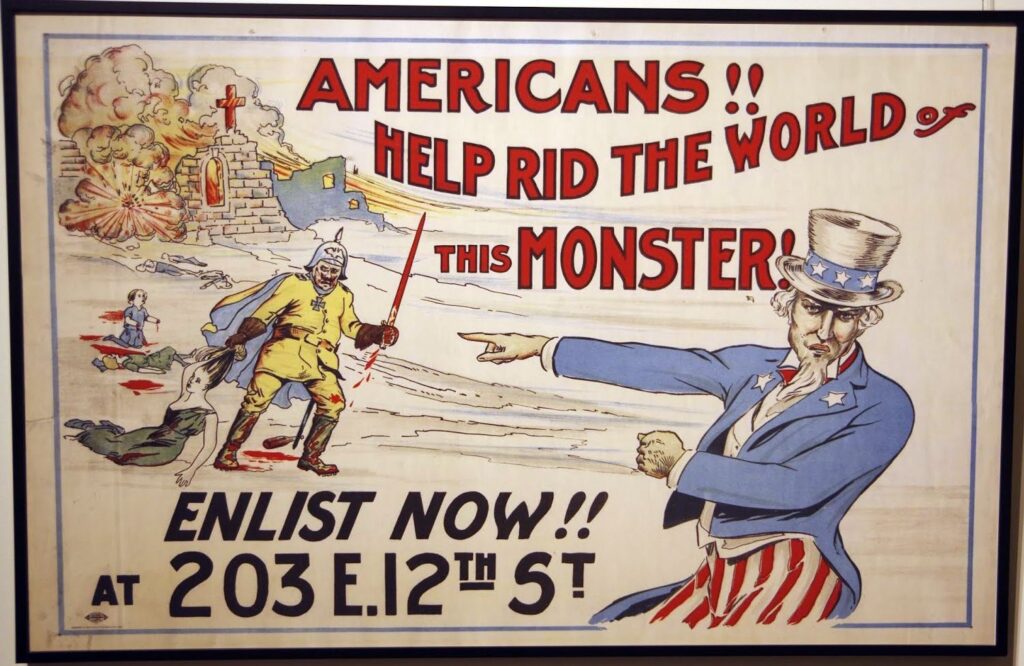
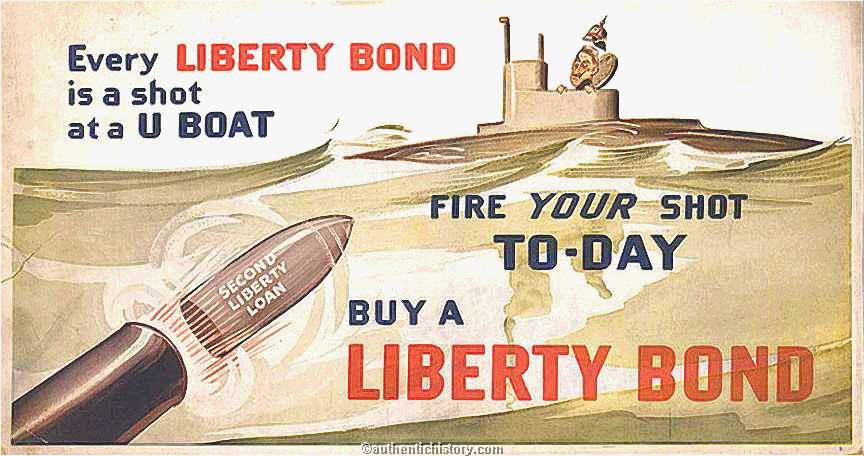
Economic strain: British naval blockade starved Germany (leading to “Turnip Winter” 1916 to 1917); inflation, shortages, strikes emerged; war economies prioritized military over civilian needs, causing hardship and unrest.
Global Involvement
Colonies supplied over 2 to 4 million troops/laborers (combatants + support), plus vital food, raw materials (rubber, cotton, minerals), and manpower to sustain the war effort. Here are the major contributors.
| Country/Region (Empire) | Approx. Troops Mobilized | Key Contributions | Casualties (approx.) | Entry/Notes |
| India (British) | 1.3 to 1.5 million | Western Front, Gallipoli, Mesopotamia, East Africa | 60,000 to 74,000 dead | Immediate 1914; largest colonial force |
| Canada (British Dominion) | 620,000 to 630,000 | Western Front (e.g., Vimy Ridge) | 56,000 to 60,000 dead | Immediate 1914; high per capita |
| Australia (British Dominion) | 410,000 to 420,000 | Gallipoli, Western Front, Middle East | 60,000 dead | Immediate 1914; ANZAC legend born Gallipoli 1915 |
| New Zealand (British Dominion) | 128,000 to 130,000 | Gallipoli, Western Front | High proportion | Immediate 1914; ANZAC with Australia |
| Africa (British/French colonies) | 1+ million total (e.g., West/East Africa, Algeria, etc.) | East Africa campaign vs. Germany; some in Europe | High (porters/disease heavy) | 1914 onward; e.g., King’s African Rifles |
| South Africa (British Dominion) | 136,000 | East/Southwest Africa conquests | Moderate | Immediate 1914 |
| Other French colonies (e.g., Indochina, North/West Africa) | Approx 475,000 (Algeria 140k, etc.) | Western Front, other theaters | Significant | 1914 onward |
Allies (Entente Powers)
The Entente Powers (also called the Allied Powers or simply the Allies) were the coalition of countries that fought against the Central Powers in World War I between 1914 and 1918.
- United Kingdom (and British Empire: including dominions Canada, Australia, New Zealand, South Africa, India, and colonies)
- France (and French Empire: including colonies in Africa, Indochina, etc.)
- Russian Empire
- Italy (from 1915)
- Japan
- United States (from 1917)
- Serbia
- Belgium
- Romania (from 1916)
- Greece (from 1917)
- Portugal
- Montenegro
- Brazil (from 1917, minor naval contribution)
- Other minor or late entrants: Siam (Thailand), Liberia, Panama, Cuba, Guatemala, Nicaragua, Costa Rica, Haiti, Honduras
Central Powers
The Central Powers were the opposing coalition in World War I, centered geographically in Central Europe.
- German Empire
- Austria-Hungary
- Ottoman Empire (from 1914)
- Bulgaria (from 1915)
Activity 3: Choice of activities.
Choose a topic from the last section ‘The Nature of Total War: Trench Warfare, War of Attrition, and New Technologies’.
Suggestions:
A menu from the Turnip War.
A propaganda poster
A timeline of new technologies
A map of allies and central powers
Consequences of World War I
Joyful Release
https://www.poetryfoundation.org/poems/57253/everyone-sang
Human Cost of World War I
WWI was the deadliest conflict in history up to that point, with staggering losses that scarred societies for generations.
- Military deaths: around 8.5 to 10 million soldiers killed (combat, disease, wounds).
- Civilian deaths: around 6 to 13 million (famine, disease, genocide, Spanish Flu pandemic exacerbated by war conditions).
- Total deaths: around 16 to 22 million (estimates vary; some include 1918–1919 flu deaths linked to war mobility).
- Wounded: around 20 to 21 million.
- Missing / POWs: Millions more displaced or unaccounted for.
Key national losses (approximate military deaths):
- Russia: around 1.8 to 2.3 million
- Germany: around 2 million
- France: around 1.4 million
- Austria-Hungary: around 1.2 million
- United Kingdom (incl. Empire): around 900,000
- Italy: around 650,000
- Ottoman Empire: around 770,000
- United States: around 116,000
The war left millions maimed (gas, amputations, shell shock/PTSD), widows, orphans, and economies ruined. The 1918 to 1919 Spanish Flu may have been responsible for 50+ million deaths worldwide, spreading rapidly due to troop movements and poor conditions.
Treaty of Versailles (1919) and Collapse of Empires
The Paris Peace Conference (1919) produced treaties that redrew the map and dismantled old empires.
Treaty of Versailles (signed June 28, 1919, with Germany):
- “War guilt” clause (Article 231): Germany accepted sole responsibility for the war.
- Reparations: Germany to pay ~132 billion gold marks (huge economic burden).
- Territorial losses: Alsace-Lorraine to France; Polish Corridor, parts of Prussia to Poland; colonies to Allies (mandates).
- Military restrictions: Army limited to 100,000; no air force, submarines, tanks; Rhineland demilitarized.
- Created widespread resentment in Germany (“Diktat” / dictated peace).
Collapse of Four Great Empires (1917–1923):
- Russian Empire
- Austro-Hungarian Empire
- Ottoman Empire
- German Empire
New states emerged: Poland, Czechoslovakia, Yugoslavia, Finland, Estonia, Latvia, Lithuania, etc… Many were multi-ethnic and unstable.
Seeds for Future Instability
The peace settlement planted the roots of future conflict. The following factors created the “twenty-year truce” which was the interwar period of fragile peace that collapsed into World War II.
German resentment
- Economic collapse (hyperinflation 1923)
- Humiliation
- “stab-in-the-back” myth fueled extremist movements (Nazis rose promising to reverse Versailles).
The ‘stab-in-the-back’ myth was a widespread postwar belief in Germany that the German army was not defeated on the battlefield in 1918 but was betrayed (“stabbed in the back”) from within by civilians, socialists, communists, Jews, and politicians who signed the armistice and accepted the Treaty of Versailles.
Unstable new states
- Ethnic tensions in Czechoslovakia, Yugoslavia, Poland
- Weak borders and minority problems.
Economic devastation
- War debts
- Reparations
- Disrupted trade
- Great Depression (1929)
League of Nations
- Created but weak as there was no US membership or real enforcement power.
Unresolved nationalism
- Italian dissatisfaction
- Japanese expansionism
- Arab resentment
Colonial grievances
- Millions from empires fought and died
- Postwar mandates ignored self-determination
Activity: Quiz
Worlds in Flames Rubric
Shortened Assessment Rubric – Activity-Based
| Activity | 1 point (Needs Improvement) | 2 points (Developing) | 3 points (Good) | 4 points (Excellent) |
| Activity 1: Themes in “The Soldier” | Only 1 or no themes, vague or incorrect | 2 themes identified, limited evidence | 3+ themes explained with relevant references | All 4 themes clearly explained with accurate poem references |
| Activity 2: Ottoman Empire Maps | Incomplete, inaccurate, or missing maps | One or two basic maps, noticeable errors | Two mostly accurate maps with main territories | Two accurate, labeled maps showing correct borders & changes |
| Activity 3: Choice Topic from Total War | Very limited, off-topic, or shows little understanding | Basic product with some errors or limited depth | Solid, relevant product with good detail | Creative, accurate, high-quality product showing strong understanding |
| Activity 4: 20-Question Quiz | 9 or fewer correct (<50%) | 10–13 correct (50–69%) | 14–17 correct (70–89%) | 18–20 correct (90–100%) |